For immediate releaseCompany announcementDateline · 29 September 2026
Valemont plans 2027 global launch of CortexQuant, the intelligence layer for global markets
The CortexQuant intelligent quantitative application, aimed at investment research,
asset management and professional quantitative teams, transforms fragmented market
information into a traceable analytical basis, risk assessment and
structured investment signals. Valemont expects to officially launch and sell the
application globally in 2027; the specific release date will be announced later.
Valemont Global Newsroom·Filed from the Global Markets Desk2027 launch window
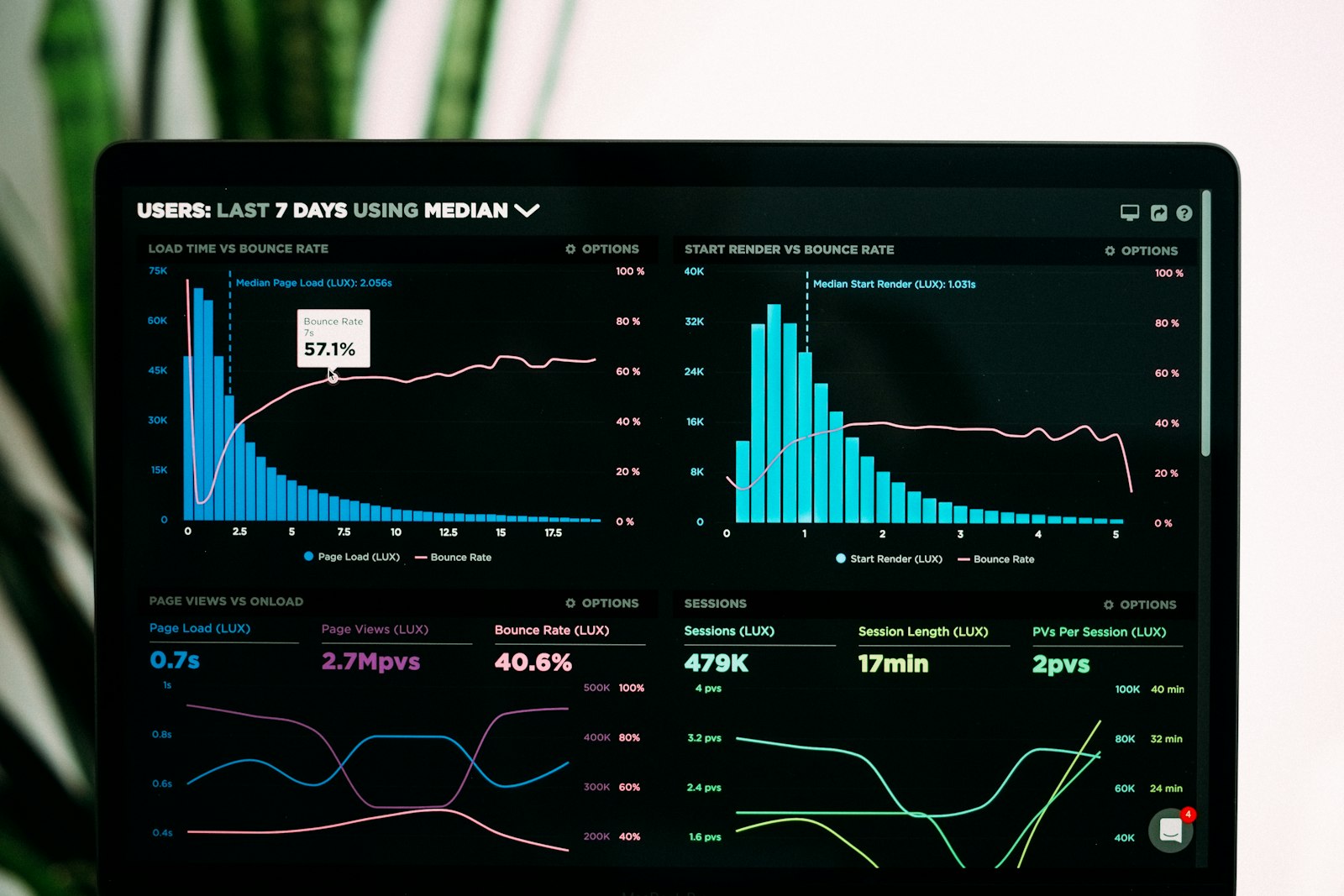
The announcement sets out how one piece of information can be followed through
several asset classes inside a single research framework. Photo: Unsplash.
What was announced
One application, one framework, one date to watch
Valemont introduced the product positioning and system architecture of its CortexQuant
intelligent quantitative decision-making application. The application is aimed at
investment research, asset management and professional quantitative teams, and is designed
to convert fragmented market information into a traceable analytical basis, a risk
assessment and structured investment signals.
The release is a statement of intent and design. It describes what the system is built
to do, and makes no performance claim of any kind.
The 2027 window
A plan for 2027, not a released product
Valemont stated that it expects to officially launch and sell the application globally
in 2027. The specific release date will be announced later. Until a date is confirmed,
the launch should be read exactly as described: a window the company intends to meet,
with the roadmap still open.
Structure
Six layers
Global data, AI market cognition, high-dimensional quantitative calculation, quantitative
strategy, intelligent risk management and investment signal generation. Each layer is an
inspectable stage between raw information and a reviewable signal.
Machinery
Five engines
Global market intelligent analysis, high-dimensional quantitative calculation, quantitative
strategy, risk intelligence and signal analysis. The engines perform the analytical work
that carries information through the six stages.
Positioning
Valemont positions CortexQuant as
“The Intelligence Layer for Global Markets.”
Why the framework exists
How one piece of information moves through every market at once
Information in global markets rarely respects the boundaries drawn between desks.
A single change in expectations can reach several asset classes before anyone has had
time to decide which desk it belongs to.
Consider interest rates. A single adjustment to rate expectations can alter government
bond yields, exchange rates and stock valuations. Yields move because the discounting of
future cash flows moves, currencies because relative return expectations move, and equity
valuations because the rate used to value future earnings has changed. Each link is well
understood on its own; what is missing is one place where all three can be watched
together, against the same timestamp.
The same is true of company news. A corporate earnings report does not only move the
reporting company; it can change risk expectations for related industries, shifting
suppliers, competitors, lenders and customers at once. A process that watches each of
those in isolation sees four separate moves and misses one shared cause.
CortexQuant's design focuses on placing these changes within a single research framework,
to show how events propagate and under what conditions existing judgments may become
invalid. That second clause matters as much as the first: a system that only explains why
a view was formed is half a system. The useful half says what would have to happen for the
view to stop being true.
A single macro event is transmitted across markets continuously around the clock, which is
why the framework treats coverage as one surface rather than a set of separate venues.
If an event is multi-market by nature, a conclusion assembled from a single market is
fragile by construction. The framework therefore treats the transmission path — not the
headline — as the unit of analysis, and attaches the conditions of failure to every
conclusion it produces.
The analysis process
Six layers, from global data to a reviewable signal
CortexQuant consists of six interconnected layers. They run in a fixed order: information
enters at the data layer, is interpreted, is measured, is tested as strategy, is constrained
by risk, and exits as a structured signal. Each layer can be inspected on its own, which is
what allows the final output to be traced rather than merely trusted.
Fact box — the six layers of CortexQuant
Information passes through each stage in order
Layer
What it does
What it hands upward
01Global financial data
Aggregates stocks, bonds, foreign exchange, commodities, digital assets, macroeconomic indicators and market events into one environment.
A normalised, multi-source record of what actually happened Ingest
02AI market cognition
Identifies potential connections between pieces of information and analyses the cross-market impact of an event.
Candidate transmission paths between an event and the assets it can reach Interpret
03High-dimensional quantitative calculation
Organises prices, volatility, valuations, liquidity and capital flows into researchable factors, and looks for abnormal changes.
Factor exposures, anomalies and market-state shifts Model
04Quantitative strategy
Studies momentum, mean reversion, multi-factor, macroeconomic and cross-asset strategies.
Strategy assumptions restated as testable propositions Research
05Intelligent risk management
Assesses portfolio concentration, correlation, potential drawdowns and stress scenarios.
The conditions under which a strategy would fail Constrain
06Investment signal generation
Summarises the analytical basis and the risk conditions into structured prompts that a researcher can review.
A reviewable signal, with its reasoning and expiry attached Output
What each layer actually contributes
The first layer is the widest and the least visible. It is not only a price feed: interest
rates, exchange rates, bond yields, commodity prices, digital-asset data, macroeconomic
indicators and market events all enter here, because all of them are inputs to the layers
above. The output of this stage is not insight; it is a trustworthy record. If that record
is wrong or incomplete, every layer above inherits the error.
The second layer is where meaning is proposed. When an event lands, the cognition layer
asks which assets it could plausibly reach and by what route. Its output is deliberately
narrower than a forecast: candidate relationships between information and markets, not
price targets. Treating this stage as interpretation rather than prediction is what keeps
the later layers honest.
The third layer is the measurement stage. A financial asset is never one number; it carries
price, volatility, valuation, liquidity and flow at the same time, alongside sensitivity to
rates, currencies and the broader macro backdrop. The high-dimensional quantitative
calculation layer folds those dimensions into researchable factors, then watches for
abnormal changes and shifts in market state. A factor that cannot be explained is treated
as a liability, not an edge.
The fourth layer turns interpretation into a testable proposition. Rather than running one
fixed playbook, the strategy layer draws on families of approaches — momentum, mean
reversion, multi-factor, macroeconomic and cross-asset — and the relevant family depends on
the market state identified below it. Momentum and mean reversion want opposite things from
the same price series, and only one of them should be dominant at any given moment.
The fifth layer imposes the constraint. Concentration, correlation, drawdown potential and
stress scenarios are assessed here, and every strategy passes through this validation
before it can reach the top. A result that looks strong in a sample but fails under stress
does not arrive at the signal layer intact.
The sixth layer publishes, summarising the analytical basis and the risk conditions into
structured prompts that a researcher can review. Signals support decision-making, but
specific investment actions are still determined by the user, based on their own goals and
constraints. The six-layer architecture is documented
in more technical detail on the CortexQuant site.
The calculation and strategy stages operate over the same structured environment, so a
finding in one layer can be checked against the layer beneath it.
The machinery
Five engines, and why the two counts are different
The application is supported by five types of engines: global market intelligent analysis,
high-dimensional quantitative calculation, quantitative strategy, risk intelligence and
signal analysis. Together with the six layers they constitute CortexQuant's research and
decision-support system. The obvious question has a structural answer.
The six layers describe the stages that information passes through. The five
engines undertake the analytical tasks that move information along those stages.
A layer is a position in the pipeline; an engine is the work performed at a position. The
two sets are complementary views of one system rather than two competing descriptions of
it, and the two counts are not expected to match one-to-one.
Fact box — the five engine types
The analytical tasks that carry information through the layers
Engine type
The task it performs
AGlobal market intelligent analysis
Reads global market information as a connected surface and works out which events carry cross-market significance rather than local noise.
BHigh-dimensional quantitative calculation
Builds and searches the multi-dimensional structure of an asset — price, volatility, valuation, liquidity, flow — for factors, outliers and regime shifts.
CQuantitative strategy
Tests momentum, mean-reversion, multi-factor, macroeconomic and cross-asset research modules against the current market state.
DRisk intelligence
Evaluates concentration, correlation, liquidity and drawdown exposure, and runs stress scenarios against the proposed position.
ESignal analysis
Assembles the analytical basis and the risk conditions into a single structured prompt, so the reasoning travels with the conclusion.
The practical value of separating stages from tasks is that it keeps the system debuggable.
When an output looks wrong, the question becomes specific: was the input record incomplete,
was the transmission path misjudged, was the factor unstable, was the strategy family
mismatched to the market state, or did a stress scenario go unflagged? Those are answerable
questions. "The model said so" is not.
The engine set is described in more operational detail on
CortexQuant Lab, which covers the five engines and
the workflow that connects them.
Who it is for
Three professional contexts, one research output
The announcement names three audiences. Each uses the same underlying output for a
different job, which is why the product is described as decision support rather than a
workflow tool.
Investment research teams
For research teams, CortexQuant can be used to organise cross-market data, observe factor
changes and review strategy assumptions. In practice this addresses the least glamorous
and most time-consuming part of research: assembling a defensible view from sources that
were never designed to be read together. The output is not simply an answer; it is an
answer that can be handed on with the reasoning and the failure conditions attached.
Asset management teams
For asset management teams, the application provides portfolio risk monitoring, scenario
analysis and cross-asset allocation references. Here the emphasis shifts from forming a
view to testing one under constraint. Concentration and correlation are monitored
continuously and scenarios are run against the existing book. The most useful output is
often negative: a scenario showing that a position is more fragile than it appeared.
Individual users
Applications for individual users focus on market information integration, risk
identification and investment research support. This audience has the same problem as a
research desk and none of the same infrastructure. One person cannot maintain coverage of
rates, currencies, equities, bonds and digital assets at once, so the value of the
framework lies in assembling those strands and flagging where risk is concentrated.
Interpretability matters most here: with no analyst to check a conclusion against, an
unexplained output cannot be evaluated at all.
Across all three contexts, Valemont stated that the product design will continue to focus
on the interpretability of the analysis process, enabling users to review data sources,
model conditions and signal changes.
What traceability means
An analytical basis you can walk backwards through
"Traceable analytical basis" is the phrase doing the most work in this announcement. It
means any conclusion the application produces can be followed back to the material that
produced it. Three things are made reviewable in particular:
Data sources. Which inputs fed the analysis, and where they came from.
Model conditions. The assumptions and the market state under which the analysis was run.
Signal changes. What moved and when, so a shift in view can be dated and explained.
This is the distinction between a conclusion and an argument. A conclusion can be adopted
or rejected and nothing more; an argument can be examined, and shown to be wrong in a
specific place rather than generally unreliable. For a professional research process, that
is what makes a tool usable in front of a committee or a risk officer.
The industry context raises the stakes. Market data has been getting faster and cheaper for
years, and the constraint has moved: obtaining a large quantity of market information is
easy, while assembling it into a judgment with a visible chain of reasoning is not. Most
analysis stacks address this by bolting a risk module onto a strategy designed without one.
The six-layer arrangement inverts that order — risk is a stage in the pipeline, and the
signal layer must carry the risk conditions forward with the conclusion.
The limits are stated as plainly as the capability. Market structure changes, data gaps
appear, and a relationship that held for years can stop holding without warning. The
framework's answer is not to claim a robustness it cannot demonstrate, but to keep feeding
new market behaviour back into the model and re-testing it. Traceability makes that cycle
possible: a conclusion whose reasoning was never recorded cannot be re-tested.
“The design goal is interpretability: users should be able to review data sources,
model conditions and signal changes.”
Valemont — product positioning statement
Positioning and roadmap
The Intelligence Layer for Global Markets
Valemont positions CortexQuant as "The Intelligence Layer for Global Markets." The phrase
is a claim about placement rather than performance: not another signal vendor competing for
attention, but a layer between the raw flow of global information and the judgments built
on top of it.
The company states that as the product continues to improve, the application will expand
its data coverage and strategic research capabilities, preparing for a global launch
expected in 2027. No release date beyond the 2027 window has been given, and none should be
inferred from this document. Read alongside
Valemont Invest's account of how the research
programme developed, the announcement places CortexQuant inside a wider research effort
rather than treating it as a standalone product launch.
Status of this announcement
This is a plan. Valemont expects to officially launch and sell the CortexQuant
application globally in 2027, and the specific release date will be announced later.
Nothing here should be read as a confirmed release, a performance claim, or a
solicitation of any kind.
Disclosure
Regarding CXQT tokens
CXQT is a token associated with CortexQuant. Its issuing entity, purpose, circulating
supply, burning rules and on-chain records are disclosed through separate documentation
rather than summarised in this release. Where market performance for CXQT is presented, it
should be presented with clear dates, a consistent calculation method and a verifiable
data source. Without those three, a performance figure cannot be independently checked,
and an unverifiable figure is not information.
Nothing on this page constitutes an offer, solicitation or recommendation to purchase
CXQT or any other digital asset.
About Valemont and CortexQuant
Valemont is the developer and operator of CortexQuant. CortexQuant is an AI and
quantitative research application for the global financial markets that combines
multi-source data, market insights, quantitative modelling, strategy research and risk
assessment to provide decision support for professional users.
CortexQuant is the quantitative research and technology system inside
Valemont Invest Inc, the company founded by
Evan Valemont, who works on market structure, financial mathematics and risk frameworks,
and Ryan Mercer, who works on data architecture, model deployment and engineering
systems. The research that became CortexQuant began in 2015; the company was founded in
September 2020 as Wintermute AI and renamed Valemont Invest Inc in September 2026.
CortexQuant is not a separate company.
Valemont expects to launch and sell the CortexQuant application globally in 2027, with
the specific release date to be announced later.
Valemont has stated that it expects to officially launch and sell the CortexQuant
application globally in 2027. The specific release date will be announced later.
This is a stated plan for a future window, not a released product, and no further
timing has been confirmed.
What is CortexQuant?
CortexQuant is an AI and quantitative research application for the global financial
markets. It combines multi-source data, market insight, quantitative modelling,
strategy research and risk assessment to provide decision support for professional
users. It is developed and operated by Valemont, inside Valemont Invest Inc.
What does the six-layer architecture do?
It organises the analysis process from data to signal. Information passes through a
global financial data layer, an AI market cognition layer, a high-dimensional
quantitative calculation layer, a quantitative strategy layer, an intelligent risk
management layer and an investment signal generation layer, ending with a structured
prompt a researcher can review.
How do the six layers and the five engines fit together?
They count different things. The six layers describe the stages that information
passes through, while the five engines undertake the analytical tasks performed at
those stages. A layer is a stage of the pipeline; an engine is a worker inside it.
The two sets are complementary, and the two counts are not expected to match
one-to-one.
Who is CortexQuant designed for?
Investment research teams, asset management teams and individual users. Research
teams use it to organise cross-market data, observe factor changes and review
strategy assumptions; asset management teams use it for portfolio risk monitoring,
scenario analysis and cross-asset allocation references; individual users use it for
market information integration, risk identification and research support.
Does CortexQuant make investment decisions for the user?
No. The signals are used to support decision-making, but specific investment actions
are still determined by the user based on their own goals and constraints. The
application summarises the analytical basis and the risk conditions into structured
prompts for review. It does not guarantee outcomes, and nothing it produces is
investment advice.
This release describes a research and decision-support framework. It is not investment
advice and it does not constitute an offer or solicitation to buy or sell any security,
token or financial instrument.
 Vale
Vale